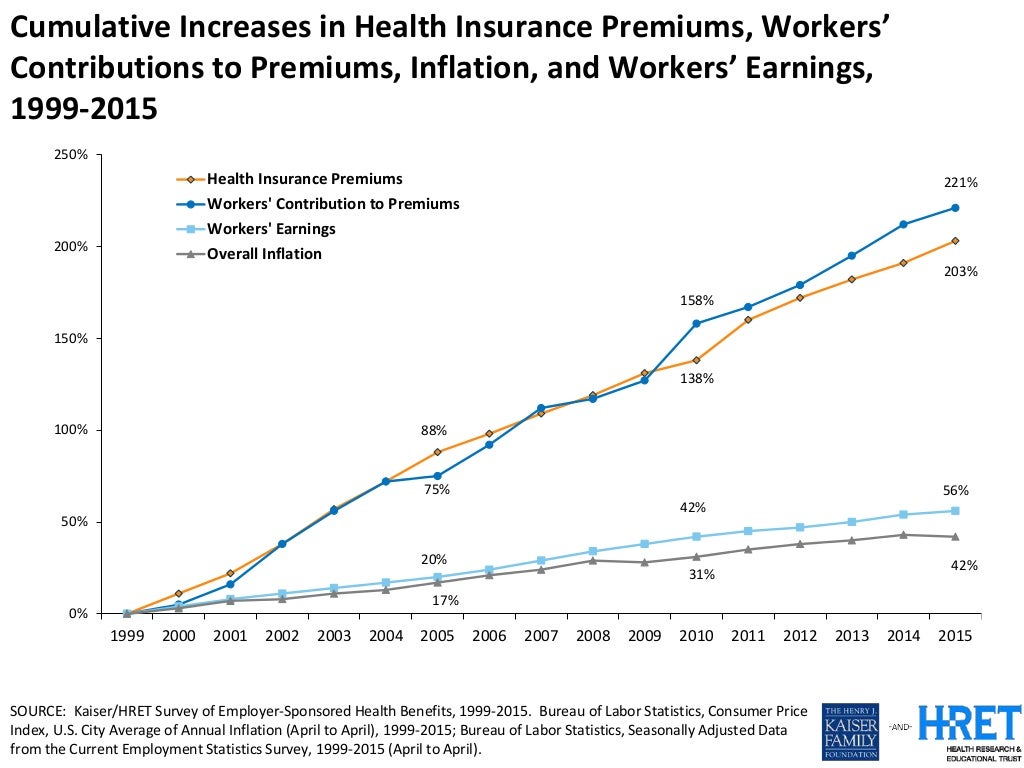
Do you know anyone who has seen their premiums go down since Obamacare was enacted in 2010? My premiums and deductibles went up yet again this year. Judging by the chart from the Kaiser Family Foundation below, I'm not alone.
Gov. Terry Branstad has joined 25 other states in a federal lawsuit challenging the constitutionality of the health care reform bill approved last year by Congress, a Branstad aide confirmed today.I'm not a big Branstad fan, but I do like this.
Branstad, a Republican, joined the lawsuit on behalf of Iowa taxpayers, said Tim Albrecht, the governor’s spokesman. The suit challenges the individual mandate of the health care reform, as well as the expansion of Medicaid, the state-federal health insurance program for low-income people, he said.
 In a victory for common sense, the Iowa Board of Pharmacy unanimously voted today to recommend that legislators reclassify marijuana from "Schedule I" (banned) to "Schedule II," which would allow medical use with a prescription.
UTAH PATRICK HENRY CAUCUS UNANIMOUSLY SUPPORTS A LAWSUIT AGAINST THE FEDERAL GOVERNMENT IN ORDER TO STOP THE FEDERAL HEALTH CARE BILL
Leading state sovereignty caucus strongly opposes the federal health care bill and supports lawsuits based on two violations of the U.S. Constitution.
The Patrick Henry Caucus adopted a unanimous position Wednesday, December 23, 2009, to oppose the Health Care Reform Bills, and to support a lawsuit against the federal government in order to stop the national health care bill from becoming law.
Calling the law unconstitutional, The Patrick Henry Caucus, which is comprised of legislators from both the Utah House of Representatives and the Utah Senate, vows to fight the federal law on multiple fronts. The Patrick Henry Caucus has an opt-out provision drafted and ready for presentation to the Utah Legislature next month. The opt-out would make it illegal for Utah agencies to implement any portion of the new federal law. The Caucus is calling on the State of Utah to join in with other States and take the lead on filing a lawsuit to stop the bill, should it receive final approval.
The Caucus believes the law is unconstitutional in at least two respects. First, the law unfairly gives preferential treatment to residents of Nebraska as a result of efforts by Senate Democrats to court the vote of Nebraska Senator Ben Campbell. The Caucus
believes that this preferential treatment violates principles of due process and equal protection and is therefore unconstitutional under the Fifth and Fourteenth Amendments.
Second, the law amounts to an excess of Congress’s enumerated powers inasmuch as it requires every American to acquire health insurance. This legislation marks the first time in history that Congress has required every single American to purchase a particular good or service, and cannot be reconciled with the notion that Congress possesses only those limited powers granted by the Constitution.
The Patrick Henry Caucus calls on the leaders from all States to join in the effort to file a lawsuit against the federal government in order to stop this wrongheaded piece of legislation. We must not allow Congress to commandeer one sixth of our nation’s fragile economy while simultaneously undermining the authority of the States.
Since these three main forces driving up health care costs are created by the government itself, is it likely that the government will be able to reduce health care prices? I cannot, for the life of me, understand the faith that many people have that the government can do so, when every other program administered by the federal government is either a wasteful disgrace or teetering on insolvency or both.
Cody lists some of the other side-effects of government health plans, including waiting lists, doctor shortages, lower survival rates, and discrimination against elderly, minority and rural patients. She recommends reading the Cato Institute's policy analysis "Health Care in a Free Society" for more examples. (I would also recommend a shorter Cato article "Obama Doesn't Have the Only Prescription for Healthcare Reform.")
So what can be done to reform the health insurance industry? Cody recommends four mostly market-based reforms:
These all certainly make sense and would be helpful in making health insurance less expensive, but it would be nice to see some reforms that lessen or eliminate the need for health insurance altogether.
Food is as much a necessity as health care, yet we don't have some elaborate, overly-complicated, often senseless system to pay for it. Imagine having to pay a $25 co-payment every time you made a trip to the grocery store, whether buying ramen noodles or veal chops. Broccoli might be "covered" while cauliflower is not. It would be utter nonsense, yet we think it makes sense for health care? So long as health care consumers rely on a third party to pay the bill, prices will continue to be out of whack with reality.
If, like food shoppers, health care consumers knew exactly what price they were paying and had to pay out of their own pockets, competition would soon drive health care prices down to the lowest sustainable level. Tax exempt "health savings accounts" are one small step in that direction. Abolishing the income tax, which has so perverted market incentives in health care (as well as everywhere else) would be even better. Well, I can dream.
Barring "radical" reform like that, Beth Cody is certainly right, a market-based health insurance industry would be infinitely better than any government-run program. Unfortunatly, that doesn't appear to be the way the political winds are blowing.

 Posts
All Comments
Posts
All Comments


